
Commercial roofing · Texas
San Antonio commercial roofing. Every detail documented.
For the people responsible for everything beneath the roof. Mammoth serves facilities managers, general contractors and property owners in San Antonio and across Texas, with repair, restoration and replacement backed by a clear written record.
San Antonio hospital
Emergency seam repair · September 2026
- Observed
- Water intrusion at a roof-to-wall transition.
- Performed
- Temporary roof-cement repair. No reinforcing fabric installed.
- Next step
- Infrared moisture survey and direct verification where needed.
Anonymized case · Performed September 29 · Reported September 30, 2026






Every commercial system, chosen for the building.
TPO & PVC single-ply
Heat-welded, reflective, energy-efficient membranes for flat and low-slope roofs. The default for most new commercial roofs in Texas.
Flat & low-slopeEPDM
The flexible rubber membrane: decades of track record, easy to repair, right for some buildings and wrong for others.
Flat & low-slopeModified bitumen
Multi-layer asphalt for flat and low-slope roofs with foot traffic. Cost-effective, tough, well understood.
Flat & low-slopeRoof coatings
Silicone, acrylic or urethane over a sound roof: 10–20 more years for a fraction of replacement, and a cooler building.
RestorationCommercial metal
Standing seam and R-panel for warehouses, churches and retail. Long life, low maintenance, high wind and hail performance.
MetalSteep-slope commercial
Shingle and tile on apartments, HOAs and assisted living: the same Monumental Installation System, run building by building.
ShingleOwners, managers and boards.
Apartments & multi-family
Phased replacements building by building, tenant communication handled, one report for the whole property.
Multi-family roofingHOAs
Common-area roofs and community-wide programs, with the documentation a board needs to vote.
Churches & schools
Steep and flat sections on one building, scheduling around services and terms, and a long history of Hill Country congregations.
Assisted living
Quiet, clean, safe work around residents; SafeSite protection and daily clean-up as standard.
Retail & light industrial
Warehouses, showrooms, strip retail: flat-roof systems, coatings and maintenance contracts.
Property managers
One contact, one report format, priority scheduling through the RapidResponse partner program.
Multi-family and apartment roofing, building by building.
An apartment community runs on residents and schedules, not just roofs. Mammoth phases the work building by building, handles the tenant communication and gives the owner one report for the whole property, with the same Monumental Installation System on every building.
After a storm the order is the same across every building that needs it: tarps the same day, a documented scope, then the repairs. Mammoth Contracting is listed in the Austin Apartment Association's supplier directory.
- Phased scheduling, early starts and tenant notices before work begins
- SafeSite protection and daily clean-up as standard around residents
- Shingle and tile on the buildings, flat-roof systems and coatings where the property has them
- One contact, one report format and priority scheduling through the RapidResponse partner program
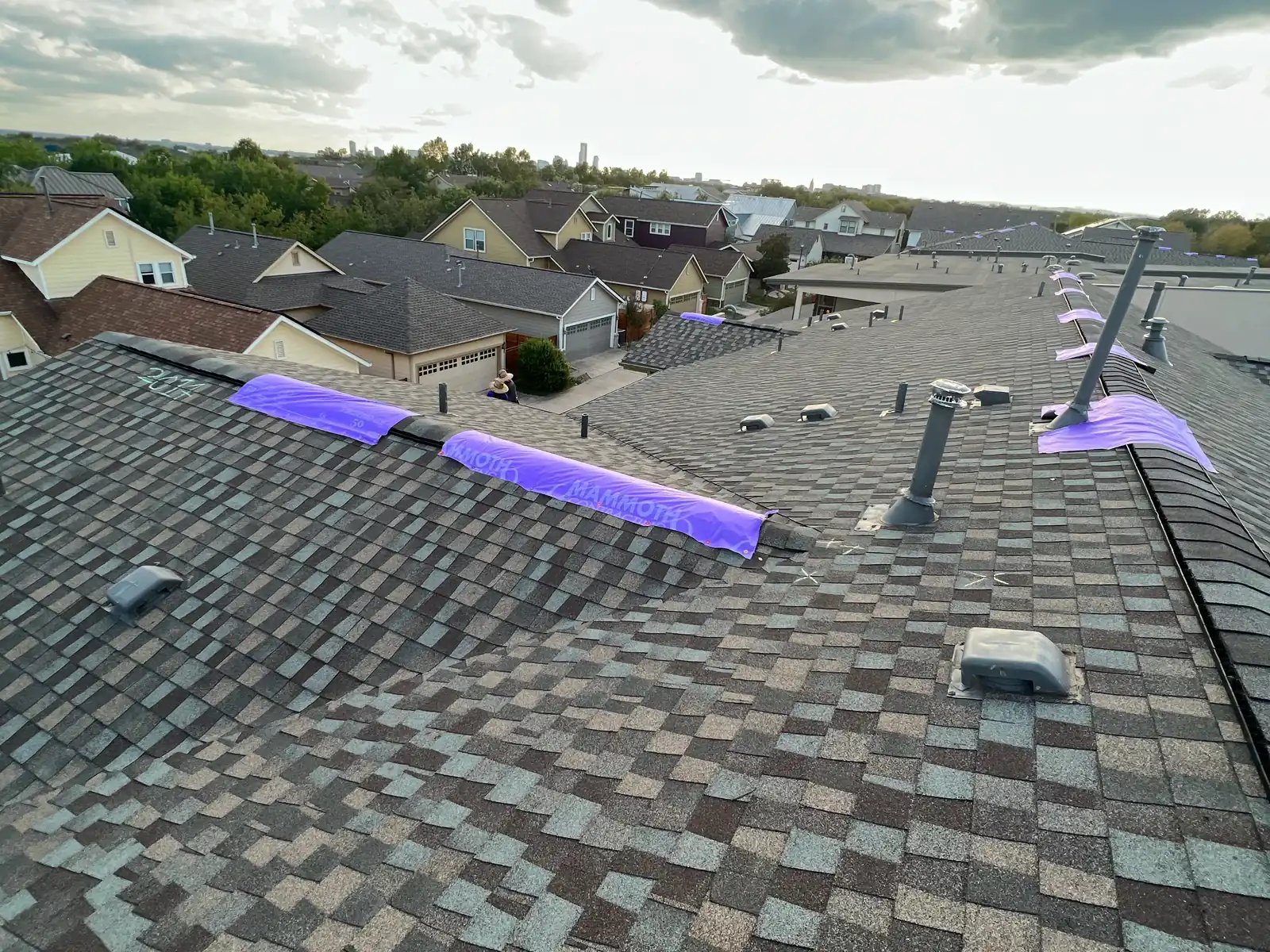
The Mammoth Boutique Experience, built for your facilities team.
The same high-touch, personal service every homeowner gets, built for the people responsible for a building. On a commercial roof the report is the product: it is written for the person who has to explain the roof to an owner, an insurer or a board, and it arrives when you need it, not at the end.
Inspection report
What we observed, what we suspect and what is confirmed, kept separate. Photographs with captions, by area. A moisture survey where the roof calls for one.
Emergency repair report
Issued the same day as an emergency measure: what was done, how, why, and what it is and is not, classified plainly as temporary or permanent.
Completion report
The work performed, the materials, the photographs before and after, the warranty, and what comes next. One document the owner can file.
Photo documentation
Every finding and every stage photographed and captioned, so nobody has to climb to understand what happened.
Progress updates
A named project manager, a message at every milestone, and a call before anything changes the scope or the price.
Findings and recommendations
Options with numbers: repair, restore or replace, what each buys in years, and what we would do if it were our building.
Commercial repairs, on film.
A short film from Mammoth on emergency commercial repair work: what the crew finds, what it does and what the building owner receives.
A hospital roof, an active leak, and a storm on the way.
San Antonio hospital
Emergency seam repair · September 2026
Documented condition
What the roof tells us.
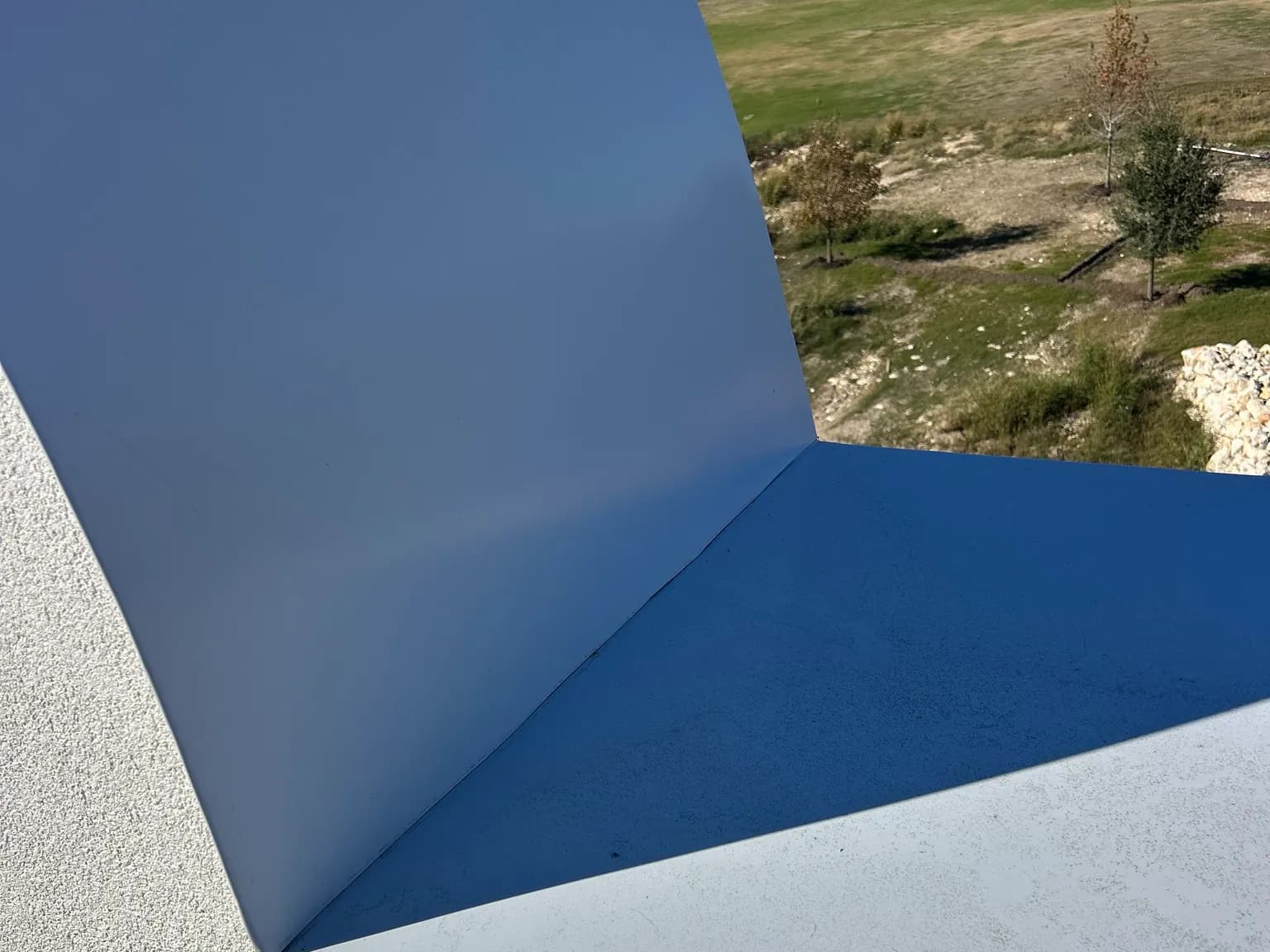
Water intrusion had been reported. The lower roof-to-wall transition met the window wall at a low level, with runoff arriving from the roof above.
Summary of Mammoth’s completion report, issued September 30 for work performed September 29, 2026. Original client details withheld.Anonymized case · Performed September 29 · Reported September 30, 2026
A general contractor asked Mammoth to investigate water entering a San Antonio hospital. With storms approaching, the crew treated the suspected lower roof-to-wall seam with roof cement and returned the gravel the same evening. The completion report plainly classified it as a temporary emergency measure, without reinforcing fabric.
The written record separated observed conditions from suspected causes, documented the work and its limitations, and recommended a thermal moisture survey with direct verification before a permanent repair or coating system. A separate proposal described a reinforced seam-seal scope; it is not evidence that the reinforced repair was completed.
That is the Mammoth Boutique Experience on a commercial roof: clear findings, honest limits, and a next step the owner can act on.
Then the survey: 140,000 square feet read in infrared.
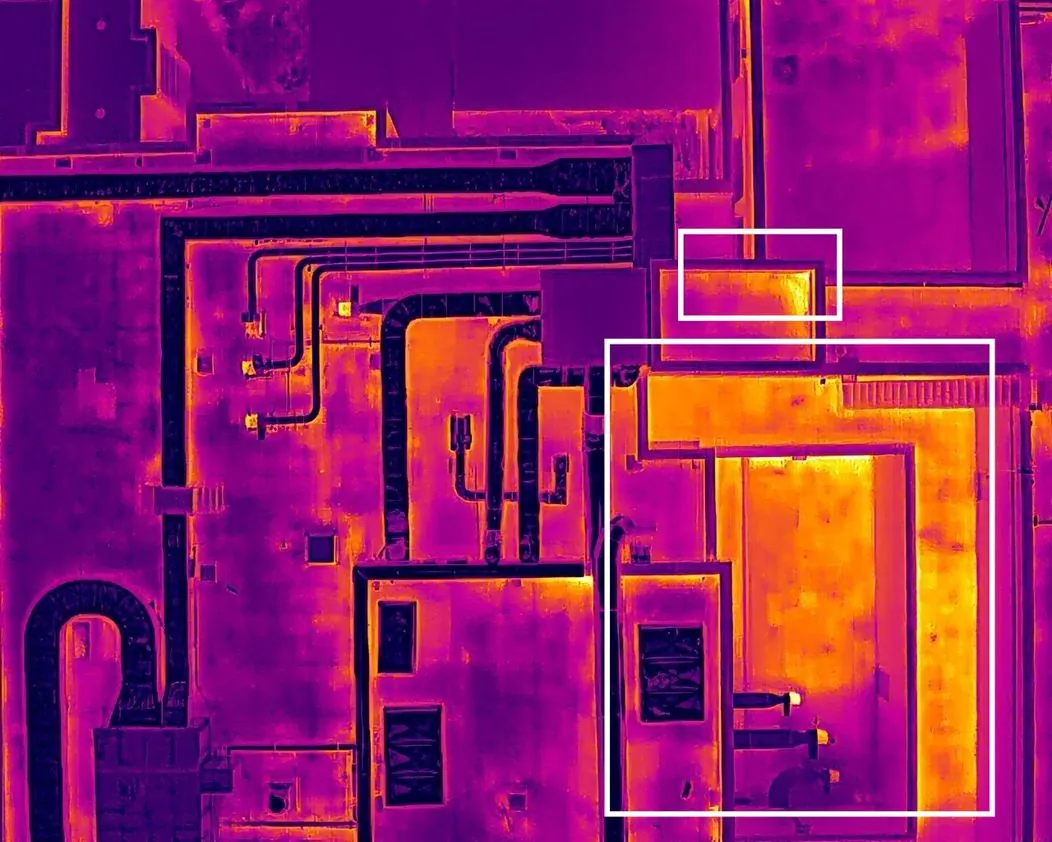
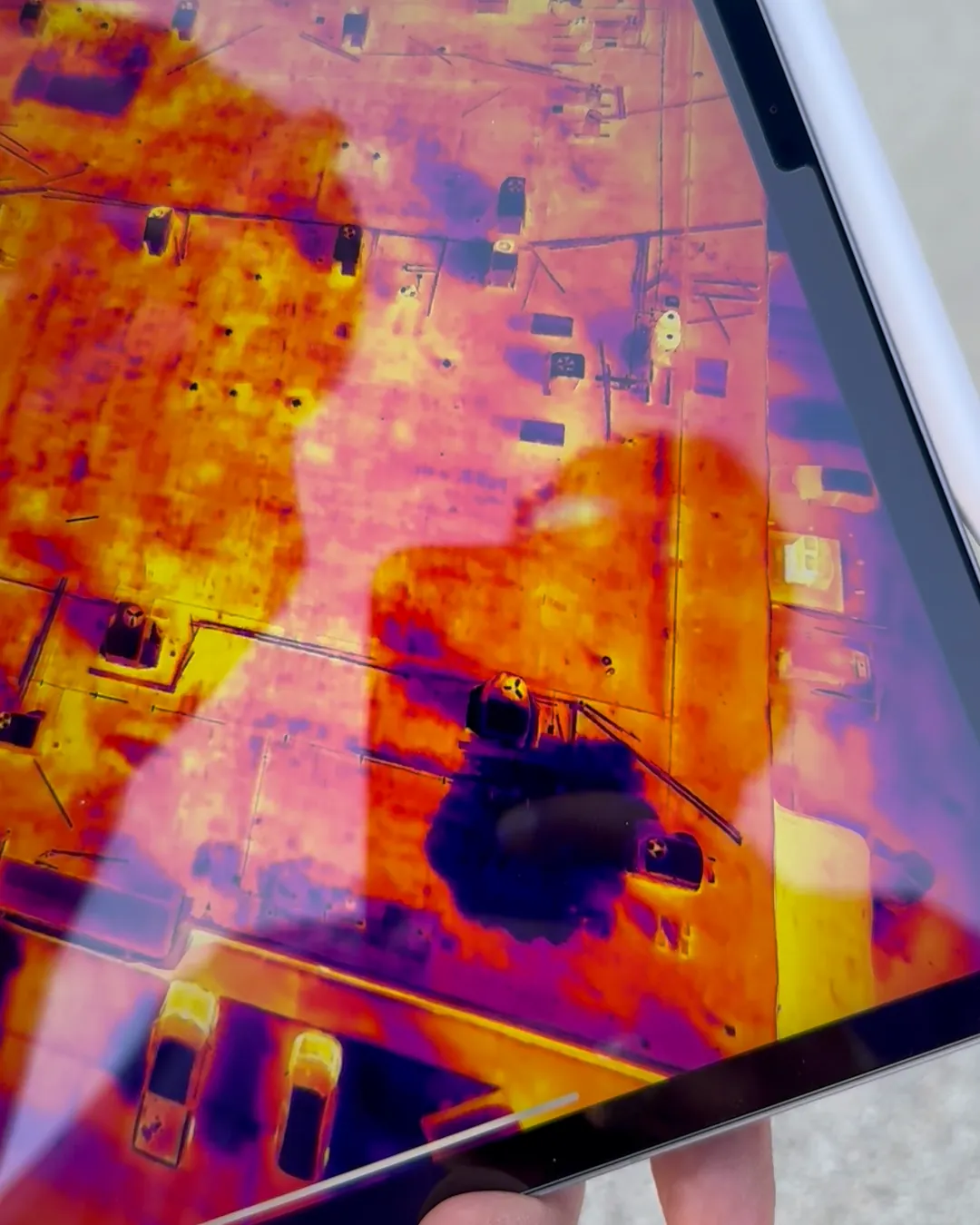
Six weeks after the emergency repair, Mammoth commissioned an independent, certified Master Thermographer to fly the hospital's low-slope roofs with an infrared camera: roughly 140,000 square feet read in one flight, 43 priority-rated images, 103 marked thermal areas.
Infrared reads surface temperature, not moisture. Each marked area is a place the roof held heat differently, often wet insulation underneath, sometimes not. So the report says plainly what the imagery can and cannot prove, and sets core samples as the next step before any scope or budget is written.
At an estimated 17.1% of the roof showing anomalies, below the 20 to 25% where replacement usually starts to beat repair, the recommendation is targeted, warrantable repairs rather than a tear-off, starting with the seam and drain the crew already knows, if the cores confirm what the imagery suggests.
Not just residential shingles.
Built-up and gravel, single-ply, tile, emergency response: recent commercial work across the systems, with the reports to match.
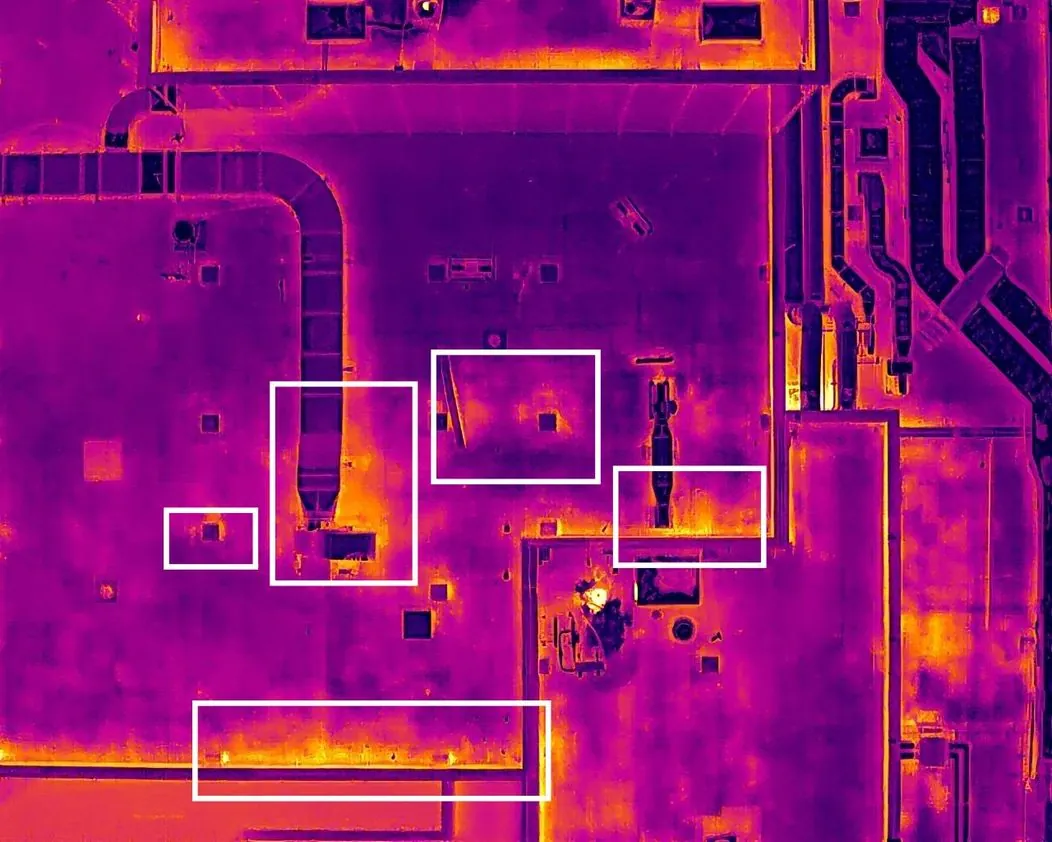
Hospital: built-up and gravel roofing
Investigation of an active leak, same-day emergency repair, a temporary-measure report, then an infrared survey of 140,000 sq ft and a core-sampling plan before the permanent scope.
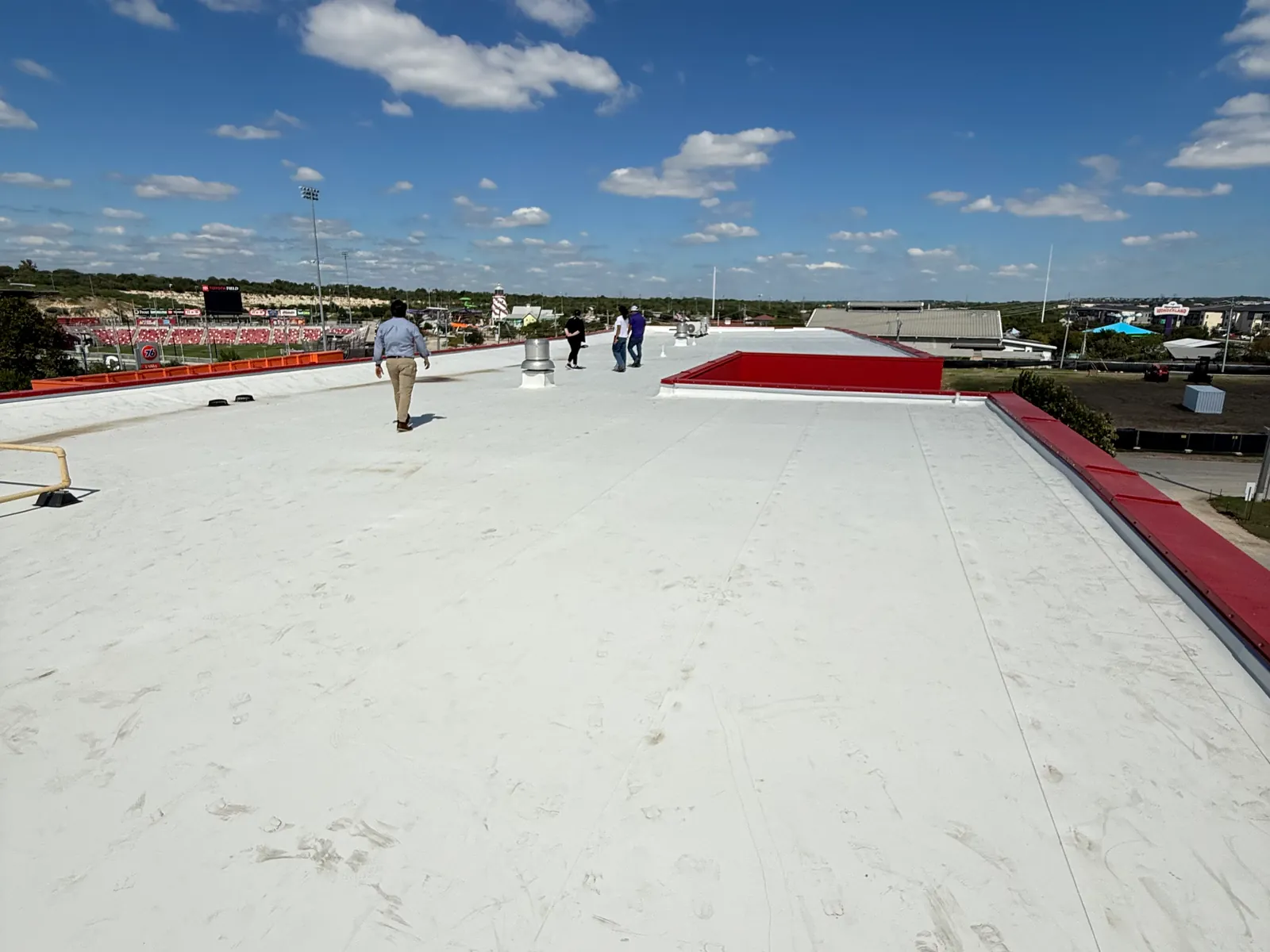
Office building: modified bitumen to TPO
An occupied office building whose modified bitumen roof was replaced with TPO: the wet areas cut out, the drainage and insulation redone, phased around the tenants.
Steakhouse and event center: tile
Steep-slope tile on a hospitality building, scheduled around service.
Apartment complex: emergency tarping
Storm response across multiple buildings: tarps the same day, a documented scope, then the repairs.
Commercial roofing in Austin, on the same written record.
Mammoth's commercial work reaches Austin too. The Austin-area team, with local inspectors and crews across Austin, Round Rock, Cedar Park, Georgetown, Lakeway and San Marcos, handles repair, restoration and replacement for facilities managers, general contractors, property owners, boards and apartment communities, with every scope and price in writing.
Commercial roof repair in Austin
Seams, flashings, drains and punctures fixed while the membrane still has years left, and any emergency measure reported the day it is done.
Arrange a roof assessmentRestoration
A silicone, acrylic or urethane coating over a sound roof: 10–20 more years for a fraction of replacement, when the deck and seams allow it.
CoatingsReplacement
When the insulation is wet or the deck is compromised: TPO, PVC, EPDM or modified bitumen, chosen for the building and scoped in writing.
Flat & low-slopeThe decision is a number, not a feeling.
- Repair if the membrane has years left and the problems are local: seams, flashings, drains, punctures.
- Restore if the roof is sound but aging: a coating adds 10–20 years at a fraction of replacement and cuts cooling costs.
- Replace if the insulation is wet, the deck is compromised or the membrane is past saving. Then the cheapest option is the one you don't have to do twice.
- Either way you get a written inspection with photos, moisture findings and a scope, not a brochure.
What we are asked to fix most.
Ponding water
Flat roofs that hold water after rain: drainage, tapered insulation and the right membrane fix it; a coating alone doesn't.
HVAC and penetrations
Curbs, pipes and units are where commercial roofs leak. We flash them properly and reinforce where units sit.
Heat and UV
Texas sun ages membranes fast. Reflective systems and coatings extend life and cut cooling load.
Code compliance
Commercial roofs carry code requirements on insulation, drainage and wind uplift. Every scope is written to meet them.
Straight answers before you book.
Ask your local teamWhich flat-roof material is best?
It depends on the building: TPO and PVC for reflectivity and energy, EPDM for flexibility, modified bitumen for foot traffic. The inspection report recommends one and says why.
Can you work around a business that stays open?
Yes. Phased scheduling, early starts, tenant notices and daily clean-up are standard on occupied buildings.
Do you roof apartment and multi-family communities?
Yes. Phased replacements building by building, tenant communication handled, SafeSite protection and daily clean-up around residents, and one report for the whole property. Mammoth Contracting is listed in the Austin Apartment Association's supplier directory.
Do you do commercial roofing in Austin?
Yes. Mammoth's Austin-area team handles commercial repair, restoration and replacement across Austin, Round Rock, Cedar Park, Georgetown, Lakeway and San Marcos, with the same inspection, emergency and completion reports as in San Antonio.
Do you offer maintenance contracts?
Yes: annual or twice-yearly inspections with drain cleaning, seam checks and a photo report, so a small repair never becomes a replacement.
Do you finance commercial work?
Financing options are available for commercial repairs and replacements; ask when you book.
Is the inspection really free?
Yes — it's the same Roof Grade visit for every service. Attic first, 75–150 photos, the 32-point Hunter-Gatherer Report, a letter grade and a plain-English verdict. You get the written report whether you hire us or not.
Will you tell me if I don't need the work?
Yes. An A grade is a handshake and a date to look again. A B means a few small repairs, priced in the open, on a roof with years left in it. We'd rather be the roofer you call in ten years than the one who sold you a roof you didn't need.
What warranty comes with the work?
Repairs carry a workmanship warranty in writing on the invoice. Full replacements carry the Mammoth Two Tusk Limited Lifetime Warranty; ask us for the warranty document and read it before you sign.
Do you report to GCs and facilities teams the way they need?
Yes. An inspection report that separates what was observed from what is suspected, an emergency report the same day as any temporary measure, a completion report with photographs, and a named project manager who updates you before anything changes. Ask us for a sample.
Know where
your roof stands.
The Roof Grade is free. The report is written.
What happens next is your decision.
- 32 inspection points, attic first
- 75–150 photos of what we find
- An honest, written recommendation