





902
major hail events in Texas in 2025, with hailstones an inch across or larger. No other state had half as many.
Insurance Information InstituteStone-coated steel · Built in Boerne for Texas weather
Most roofs are built to be replaced. Ours is a complete stone-coated steel system: engineered for Texas hail, installed by our own crews, and backed by a company that plans to be here long after the job is done.
The Forever Roof™ is the name of Mammoth's roofing system, not a guarantee that a roof cannot be damaged or will never need repair. Coverage is defined by the written warranty.
A cost, or an investment?
Think about the last phone, washer or truck you bought. Did you think, “that's the last one I'll ever need”? Most things are built to be replaced, and roofs are no exception. A roof that has to come off again in ten or fifteen years isn't one roof. It's the down payment on the next one.
The Forever Roof™ was built to break that cycle: a system designed for what actually comes through Texas, so a roof stops being something you keep thinking about.
The Forever Roof™ is drawn as one roof because that is what the system is built for. It is a name, not a guarantee: the fine print beside the name at the top of the page applies.
Stop buying roofs. Buy your last one.
Get my free Roof GradeThe Forever Roof™
The Forever Roof™ is the name of Mammoth's stone-coated steel roofing system: the deck work, the barriers, the underlayment, the panels, the fasteners, the flashings, the ventilation and the people who install it, as one specification. It is a system we own and stand behind: the materials carry their manufacturer's warranty, and the installation carries ours.
major hail events in Texas in 2025, with hailstones an inch across or larger. No other state had half as many.
Insurance Information InstituteTexas homes hit by damaging hail in 2025, far more than in any other state.
Cotality, 2026 severe convective storm reportClass 4, explained
The Forever Roof™ is a Class 4 impact-rated system, the highest rating under the UL 2218 impact test. Here's what that test actually does: a steel ball is dropped twice on the same spot. Class 3 uses a 1.75-inch ball from 17 feet. Class 4 uses a 2-inch ball from 20 feet. To pass, nothing can open up through the back of the material.
One thing worth knowing: many insurance carriers offer a premium credit for an impact-resistant roof. Every carrier sets its own, and some offer none, so ask your agent what yours offers.
Sources: the test as IBHS describes it and UL Solutions summarizes it; on insurance credits, the Texas Department of Insurance.
Most roofs are sold by what's on top. The Forever Roof™ is built from the deck up, and every layer is there for a reason.
We start underneath. Rotted or delaminated decking gets found and replaced before anything goes over it, never covered up.
Sealed protection at the eaves, the valleys and every spot water likes to collect.
A modern synthetic layer across the whole deck, not old-school felt that tears and holds water.
Steel with an aluminum-zinc coating, finished in stone granules: the look of a traditional roof with the toughness of steel. We cut them with shears, never an abrasive grinder that burns the coating.
They tap into the panel and create a friction bond that holds tight and watertight, with no rubber grommet to dry out and fail.
The rake channel interlocks with the panel edge along its entire length, instead of a trim piece screwed on at intervals.
Where a chimney or wall needs it, we bend flashing on site with our own equipment, so it fits that roof, not a generic one.
The flashing recommended for stone-coated steel, with a granule coating on top so it blends into the roof instead of standing out.
We calculate what your attic actually needs, intake and exhaust, instead of putting back whatever was there.
You've probably heard “lifetime warranty” from every roofer who's knocked on your door. Here's what the fine print usually says: a manufacturer's warranty covers the product when it's installed exactly to their specifications. If it wasn't, the coverage can be voided, and the burden of proof sits with the homeowner.
That's why we own the whole process. Same crews, same standards, start to finish, so the warranty you're promised is the one you actually keep. Around the job: Woolly Coat™ 8-point property protection while we work, and a SweepCheck™ cleanup when we leave.
Your proposal spells out both layers, and the warranty documents say exactly what each one covers.
The manufacturer's limited lifetime material warranty on the stone-coated steel panels, transferable to a new owner. It covers winds up to 120 mph and Class 4 hail, on the manufacturer's written terms.
Mammoth's own warranty on the installation. If a covered defect comes from our workmanship, we repair it, labor and materials included.
In field testing at Oak Ridge National Laboratory, far less heat came through the ceiling under stone-coated metal with a vented air space beneath it than under conventional asphalt shingles. The test roofs also used heat-reflective color pigments, and the lab found the air space may be the stronger of the two effects.
Some Forever Roof™ profiles, like our shake styles, install over battens that create that air space. Shingle-look profiles install directly to the deck. Either way, ventilation isn't an afterthought: we calculate it for your attic and build it in.
Results are from ORNL's research conditions. What any home sees depends on the home, the attic and the climate.
Read the Oak Ridge study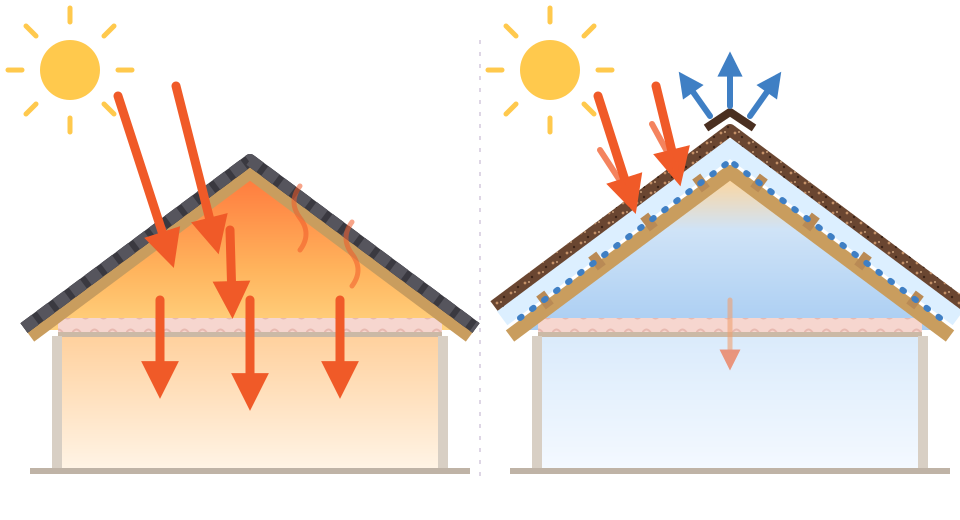
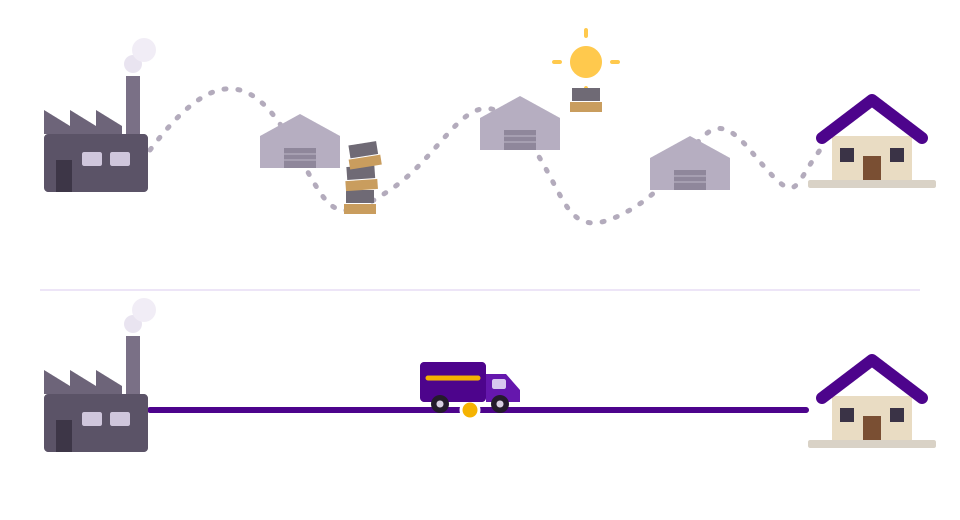
Between the plant and your house, roofing material can pass through four or five sets of hands, and every one is a chance for damage nobody sees. Pallets get stacked too high. Stock sits in the sun. Orders get filled from different production lots, and the color shift doesn't show until it's on the roof.
We go back up the line to where material is made. Same lot, handled right, straight to your driveway. That kind of access isn't handed out: a contractor has to prove the volume and pass the manufacturer's certification to get it.
A roof designed to last decades is only as good as the company that will still answer the phone. That's true of anyone you hire, not just us.
of new construction businesses closed within five years, in U.S. Bureau of Labor Statistics records going back to 1994.
U.S. Bureau of Labor StatisticsFounded in Boerne, Texas, and still headquartered there.
Better Business Bureau profileQualified Remodeler ranks remodelers nationally by verified volume. We have made the list five years running, 2022 to 2026, at No. 383 in 2026.
Look us up on the listrating from the Better Business Bureau, and accredited since 2018.
Better Business Bureau profileLicensed roofing contractor, commercial and residential, license #03-0528. Texas doesn't require a roofing license. We carry this one anyway.
RCAT license listingEverything underneath stays exactly the same: the decking work, the barriers, the underlayment, the flashing, the ventilation math and the install standards. The only thing that changes is what goes on top.
| Side by side | Stone-coated steel | Class 4 impact-resistant shingle |
|---|---|---|
| Top layer | Steel panels with a stone granule finish, in shake and shingle-look profiles | Impact-resistant architectural shingle |
| Impact rating | Class 4 | Class 4 |
| Everything underneath | The full system | The full system |
| Best for | The roof you never think about again | Full-system protection with a traditional shingle look |
The Forever Roof™ is the stone-coated steel finish. The house and its colors are an illustration, not a manufacturer's color chart.
Size and layout come with the house. Material and labor are yours to choose, and a cheaper bid has to come out of one of them. Move the sliders for a range; your exact price comes from a free Roof Grade™.
Estimated installed range
Estimated installed range: $8,000 to $9,000
Your exact price comes from a free Roof Grade™.
Get my free Roof GradeNo. The stone granule finish reads like a traditional roof from the street. Most neighbors won't know it's steel until you tell them.
Class 4 means hail shouldn't break through to the back of the material. Surface marks are possible in severe storms, which is why it's worth asking your agent how your policy treats cosmetic damage on a metal roof.
It might. Many carriers offer a credit for impact-resistant roofs, but each sets its own and some offer none. Your agent can tell you exactly.The Texas Department of Insurance form for an impact-resistant roof
We don't. Every Forever Roof™ is a full tear-off to the deck, so we can inspect and fix what's underneath.
Two layers. The steel panels carry the manufacturer's limited lifetime material warranty, which covers winds up to 120 mph and Class 4 hail on the manufacturer's written terms and transfers to a new owner. On top of that, we back our own installation with Mammoth's 10-year workmanship warranty. Your proposal spells it all out in writing.
It depends on your roof's size, pitch and layout. Start with a free Roof Grade™: inspection, photo report, measurements and a written proposal, yours to keep.
The Forever Roof™ is the name of Mammoth's stone-coated steel roofing system, not a guarantee that a roof cannot be damaged or will never need repair. It is built to be the last roof the house needs, and the written warranties define what is covered.
Your written proposal names the manufacturer, the panel and every component, with the installation requirements we follow. Ask for the specification sheets at the inspection.
The Roof Grade is free. The report is written.
What happens next is your decision.